The High Priestess
A brief loop, in recognition of . . .
International Women's Day
Hello everyone. March is Women’s History Month, and today is International Women’s Day. So I’m looping out from the Redux/Time Capsule series to focus on one of Tarot’s powerful female archetypes.
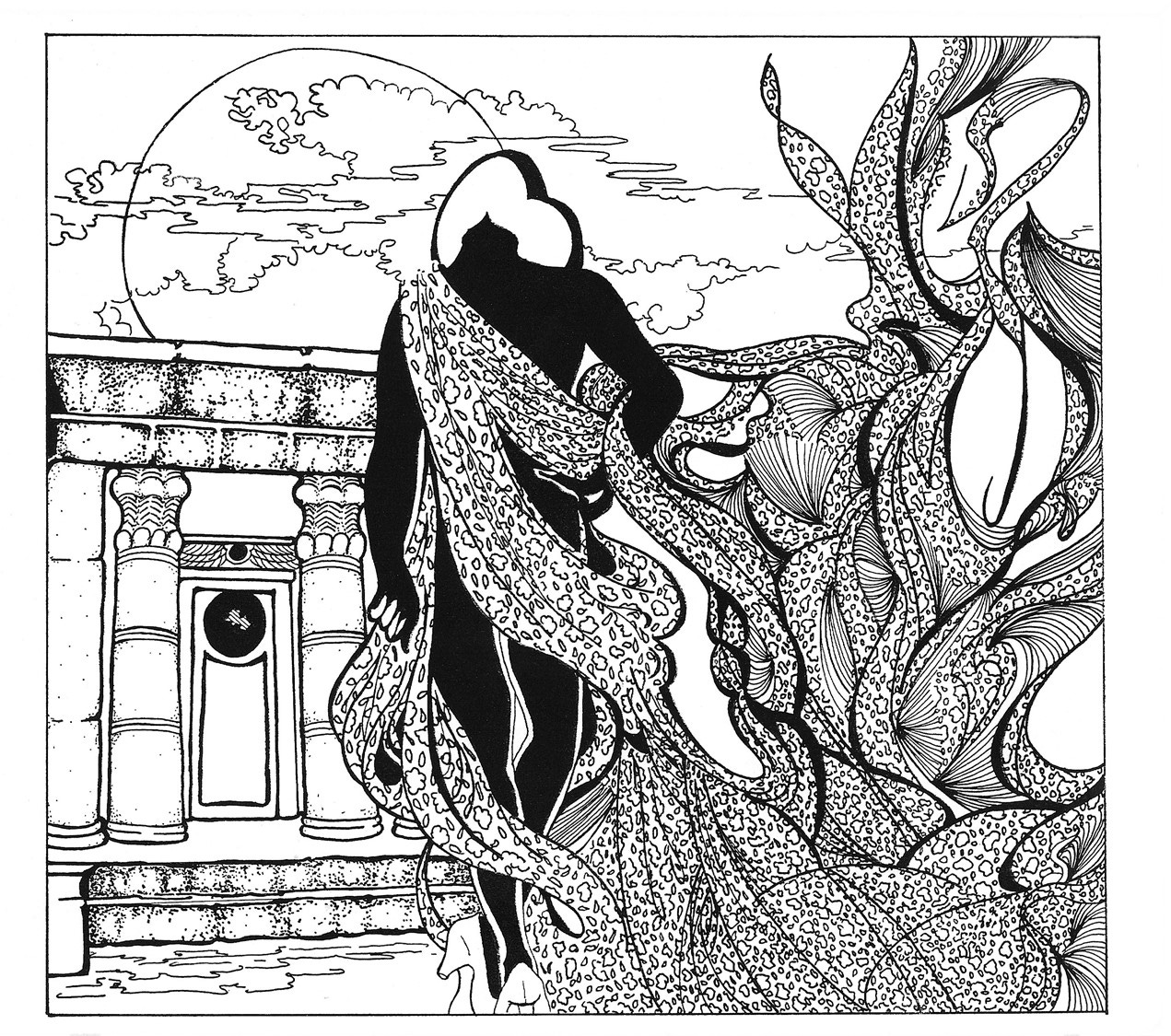
Here’s an overview, in the form of notes for a book I’ve been working on intermittently:
The High Priestess
Historical Perspective
For much of early Tarot history, this card was called The Papess, and featured a woman in a nun-like habit, wearing a bishop’s miter. The Papess was based either on the probably-mythical character of Pope Joan (elected Pope by credulous male cardinals who later received a nasty shock!) or on a probably-real relative of the Visconti family who was actually invested as “Pope” of a heretical sect. In esoteric decks, the Papess was radically transformed into a priestess of of the Egyptian goddess Isis (or in some decks, the goddess herself) and was shown accompanied by symbols of the moon and flanked by pillars representing the mystical temple.
As a matter of fact, the presence of The Papess in early decks was taken by later commentators as one proof of the Tarot’s esoteric origins. Since there was no feminine presence in the Church hierarchy, they reasoned, The Papess must have been included to represent mystery religion (that is, the type of religion based on direct spiritual experience), as opposed to the organized (exoteric) religion represented by another trump, The Pope. But in the pattern-setting Rider-Waite deck, both Pope and Popess were turned into figures of mystery religion, as two characters associated with the late Greek initiation rites called the “Eleusinian mysteries.” (More about this in the entry for The Hierophant.)
Divinatory Principles
Intuition, mystery, and the eternal feminine in its knowing aspects. A woman of deep sensitivity.
Problematically: secrecy and manipulation.
Archetypal Theme
The development of the “anima” or feminine archetypal principle, also called the “soul.” From the anima arise imagination and fantasy; it is the anima that connects consciousness with unconscious life and “animates” our perception of the world as a meaningful environment.
Mythic Associations
In addition to her connection with the Egyptian goddess of wisdom, Isis, The High Priestess is mythically related to Artemis/Diana, the goddess of moon and hunt. Daughter of Zeus and twin of Apollo, Artemis was the protector of virgins, known for her jealousy and quick temper.
The High Priestess may also be seen as the maiden Persephone (daughter of Demeter, who is depicted in the Tarot Empress), and as the Virgin Mary in Christian myth.
Correspondences
Moon. Blue. Camphor.
Alchemical Connections
Her alchemical role is that of soror, the alchemist’s “sister” or female spritual companion, deemed by many alchemical authorities to be essential to the Great Work.
Elaborations . . .
Music
I’ve thought about this much more since my original draft—I’ll update below.Art
The High Priestess is a type not much portrayed in Western art, but her mysteriousness and unrevealed depths might be glimpsed in the works of Salvador Dali (and other surrealists) as well as in the luminous women painted by Whistler and by Gustav Klimt. Also look for her in Indian and Tibetan art, in the form of goddesses like Tara and Shakti.
Literature
Here again, this is a kind of woman not widely portrayed in Western literature; the Empress is much more prevalent! Oedippa Maas (in Thomas Pynchon’s The Crying of Lot 49) might be a Priestess figure. Then there’s Sonia in Crime and Punishment, and perhaps Cordelia in King Lear.
I should have considered writers (like Sylvia Plath) as well as characters. The next section--Popular Culture--also needs expansion. Popular Culture
Madonna—the knowing woman, ever-changing and never really revealing! Princess Diana (in contrast to the Empress-type Camilla Parker-Bowles).
Notes
The High Priestess and the Empress represent two complimentary aspects of the Goddess, who was both the source of mystery and the mother of all. These two cards are also the two aspects of the anima--the inward principle of imagination, on the one hand, and the outward principle of creativity, on the other.
Just as The High Priestess and The Empress show us the dimensions of feminine consciousness, the next pair of cards, The Emperor and The Hierophant, reveal the dimensions of masculine consciousness. Taken together, these four cards form two “couples”--the material parents (Empress and Emperor) and the spiritual parents (High Priestess and Hierophant). The High Priestess and The Hierophant also portray another variant (Isis/Osiris) of the mythic fertility theme featuring the search of the earth goddess for her lost lover, brother, or child who either has been killed or has disappeared from Earth.
About the music . . .
I originally thought about various kinds of chant and some ancient folk music traditions that might be associated with the goddess archetype—but when I came back to this draft today (after quite a few years) I listened to some examples and nothing seemed right. So I asked AI for some ideas, and got a playlist of several dozen wildly assorted pieces.
Taken all together they do reflect various aspects of The High Priestess, and if you want the playlist, leave a comment or send me email. But mainly, that adventure made me realize how multi-faceted this card is. (The Empress seems to me much simpler, and I’ll share my notes about her sometime in March.)
Then I decided on another tack for capturing HP in music, and I decided to look for a voice and a persona rather than analyzing various kinds of musical association.
And here’s where I eventually landed:
This particular video offers two aspects of the Priestess, I think. The mystery, the depth, the almost overpowering intensity on one hand. On the other hand—the grace, control, and rhythmic energy of Irish step-dance. You see all of that unfold in these five minutes of live performance.
More soon, C


